



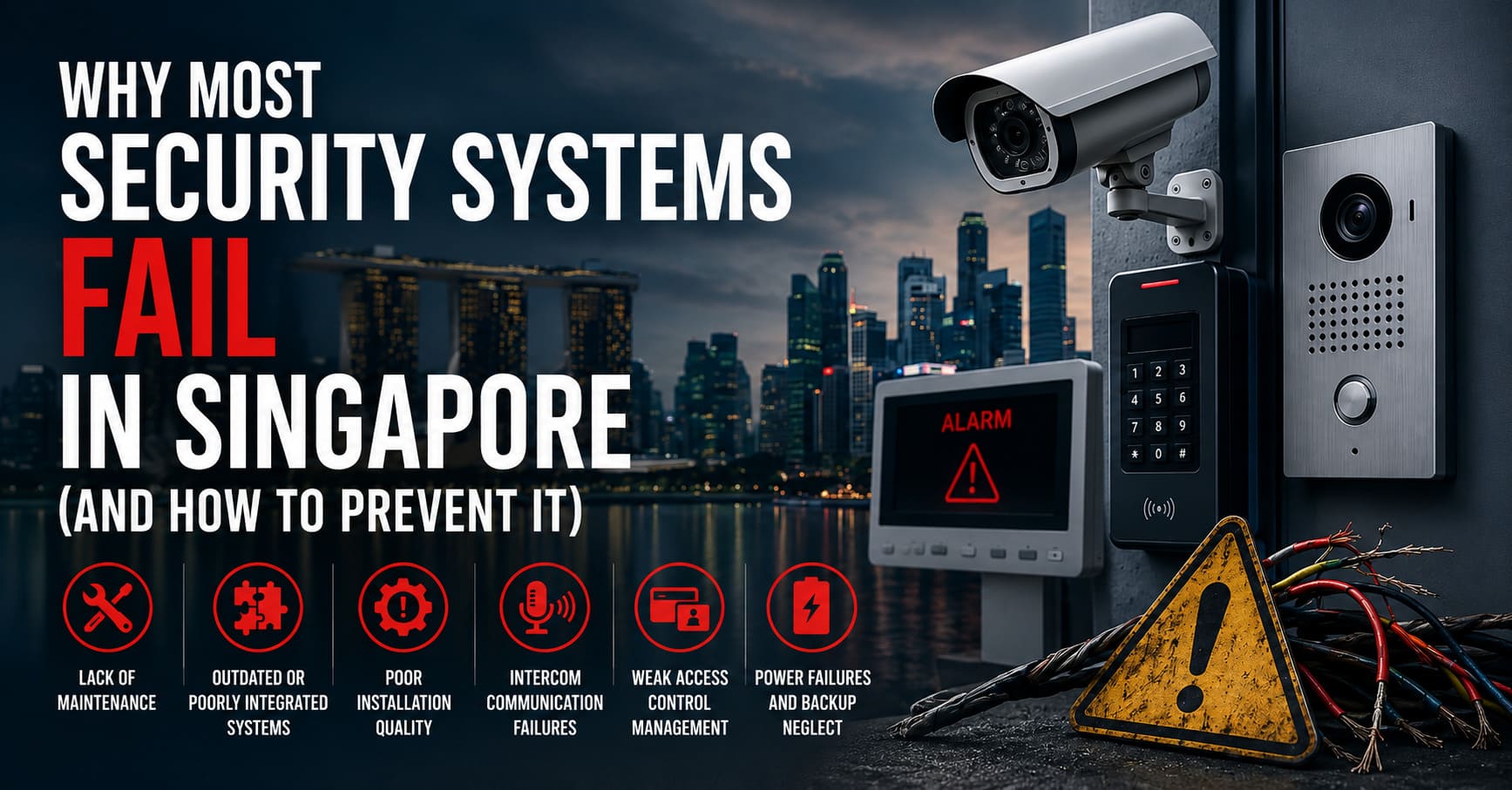
Security systems are installed in thousands of homes, offices, and commercial buildings across Singapore—but a surprising number of them fail when they are needed most. Whether it’s a faulty alarm, a non-responsive access reader, or a broken intercom, system failure often happens not because of poor equipment, but due to poor maintenance and planning.
In this article, we break down the most common reasons security systems fail in Singapore—and how you can prevent it before it becomes a costly problem.
1. Lack of Regular Security Maintenance
One of the biggest reasons security systems fail is simple: no routine servicing.
Many property owners assume that once a system is installed, it will run forever without issues. In reality, components like sensors, wiring, control panels, and power supplies degrade over time—especially in Singapore’s humid climate.
Without proper security maintenance small issues like loose wiring or battery degradation can escalate into full system failure.
How to prevent it:
- Schedule preventive maintenance at least 1–2 times a year
- Test backup batteries and power supply regularly
Clean sensors and clear system logs
2. Outdated or Poorly Integrated Systems
Many buildings in Singapore still use outdated security setups that don’t communicate well with newer systems. This leads to delays, false alarms, or total system breakdown.
For example, an old card reader may not integrate properly with modern access control software.
This is especially common in:
- Condominiums upgrading access systems
- Offices expanding security coverage
- Retail shops adding new entry points
How to prevent it:
Upgrade to integrated systems such as:
- Door access system singapore
- Modern cloud-based monitoring systems
- Smart controllers that sync across devices
3. Poor Installation Quality
Even the best security equipment will fail if installed incorrectly.
Common installation issues include:
- Incorrect programming of control panels
- Poor placement of motion sensors
- Weak signal coverage for wireless devices
- Usage of wrong wires
These mistakes often show up months after installation, when systems begin to malfunction unpredictably.
How to prevent it:
Always engage experienced professionals who understand local building requirements and environmental conditions.
4. Communication Failures in Intercom Systems
In many residential and commercial buildings, intercom systems are the first point of contact—but also one of the most frequently failing components.
Issues include:
- No audio or distorted sound
- Failed door unlocking commands
- Connectivity issues
These problems often occur due to wiring faults or outdated hardware.
How to prevent it:
Regular servicing of your intercom system singapore ensures clear communication and reliable door control functionality.
5. Weak Access Control Management
Access systems are only as strong as their configuration.
Common problems include:
- Shared or lost access cards
- Poor user access control settings
- No audit trail monitoring
- System not updated after staff turnover
This can lead to serious security vulnerabilities in offices, condos, and warehouses.
How to prevent it:
Upgrade to modern card access system solutions with:
- Real-time access logs
- Remote card deactivation
- Role-based access control
- Mobile or biometric integration
6. Power Failures and Backup Neglect
Many security systems rely on continuous power. However, backup batteries or UPS systems are often neglected until a blackout occurs.
When this happens, entire systems can shut down—including alarms, access system and monitoring systems.
How to prevent it:
- Test backup batteries regularly
- Replace aging UPS units
- Ensure critical systems have redundant power sources
Final Thoughts
Security systems in Singapore don’t usually fail because of bad equipment—they fail because of neglect, poor integration, and lack of maintenance.
If you want your system to stay reliable, the key is simple:
install properly, maintain regularly, and upgrade when needed.
A well-maintained system not only protects property but also ensures peace of mind every day.